The Art of the Mix
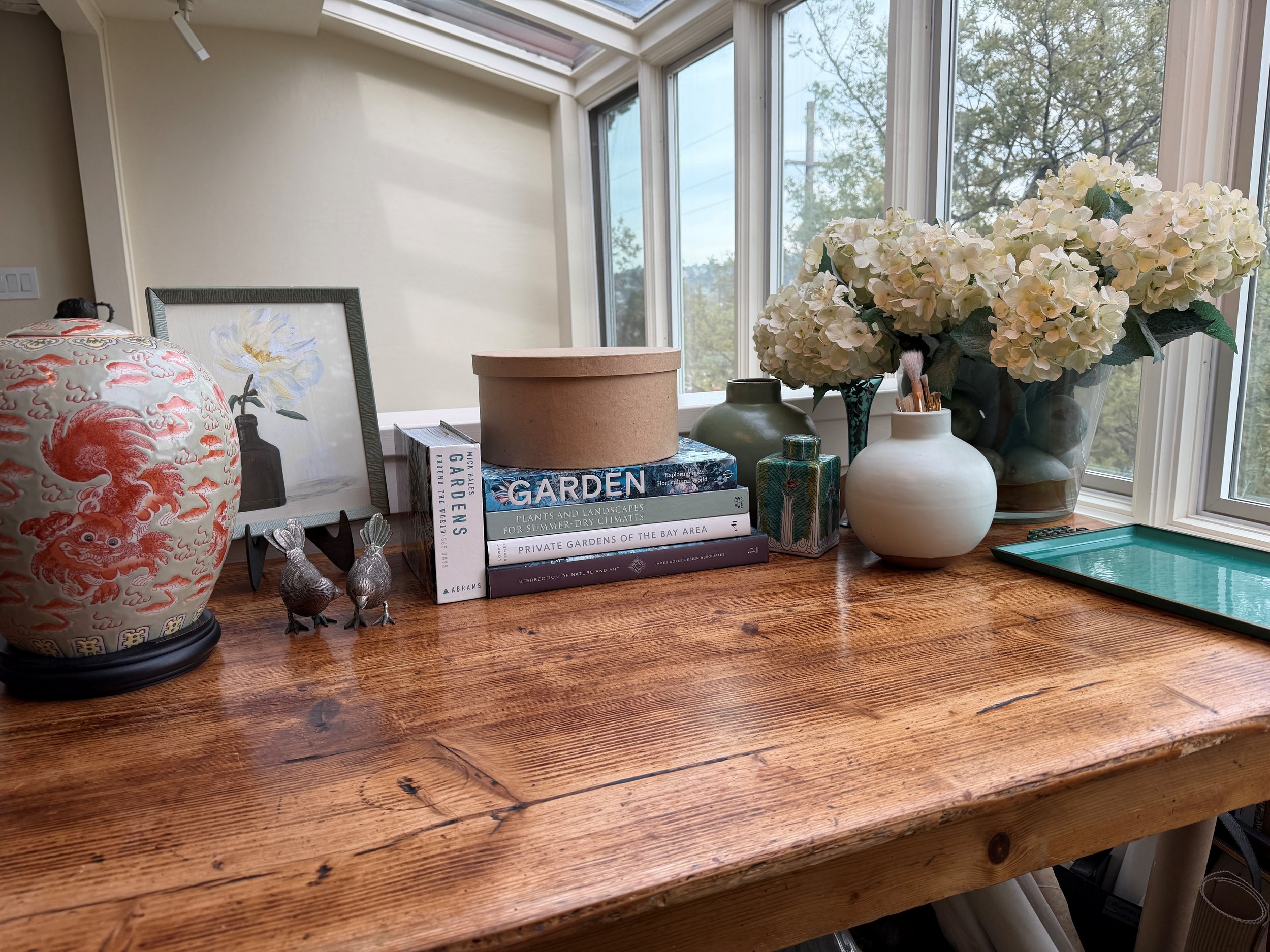
The Elements
Pine farmhouse table, 19th century
Lidded Chinese porcelain ginger jar with foo dogs and rooster in celadon glaze with alum red overglaze, late Quin Dynasty to Republic Period (late 19th to mid-20th century)
Vintage picture frame, c. 1940s
Random assortment of books about the garden, contemporary
Unfinished kraft paper mache hatbox with matching fitted lid, contemporary
Matte ceramic spherical/column vases (2), Crate & Barrel, 2005
Bohemian enameled vase, 1910
Hollywood Regency textured enamel moire glaze serving tray, in turquoise, Kyes Pasadena, 1950s
The Design Sensibility
Creative vision
Aesthetic judgment
Ability to recognize potential
Curation
Understanding of color, balance, composition
Ability to integrate disparate elements into a cohesive whole
Sophisticated interiors aren't necessarily assembled from a single era, style or price point. Juxtaposing vintage finds and contemporary pieces of varied value creates something neither could achieve alone. The magic is in the mix.
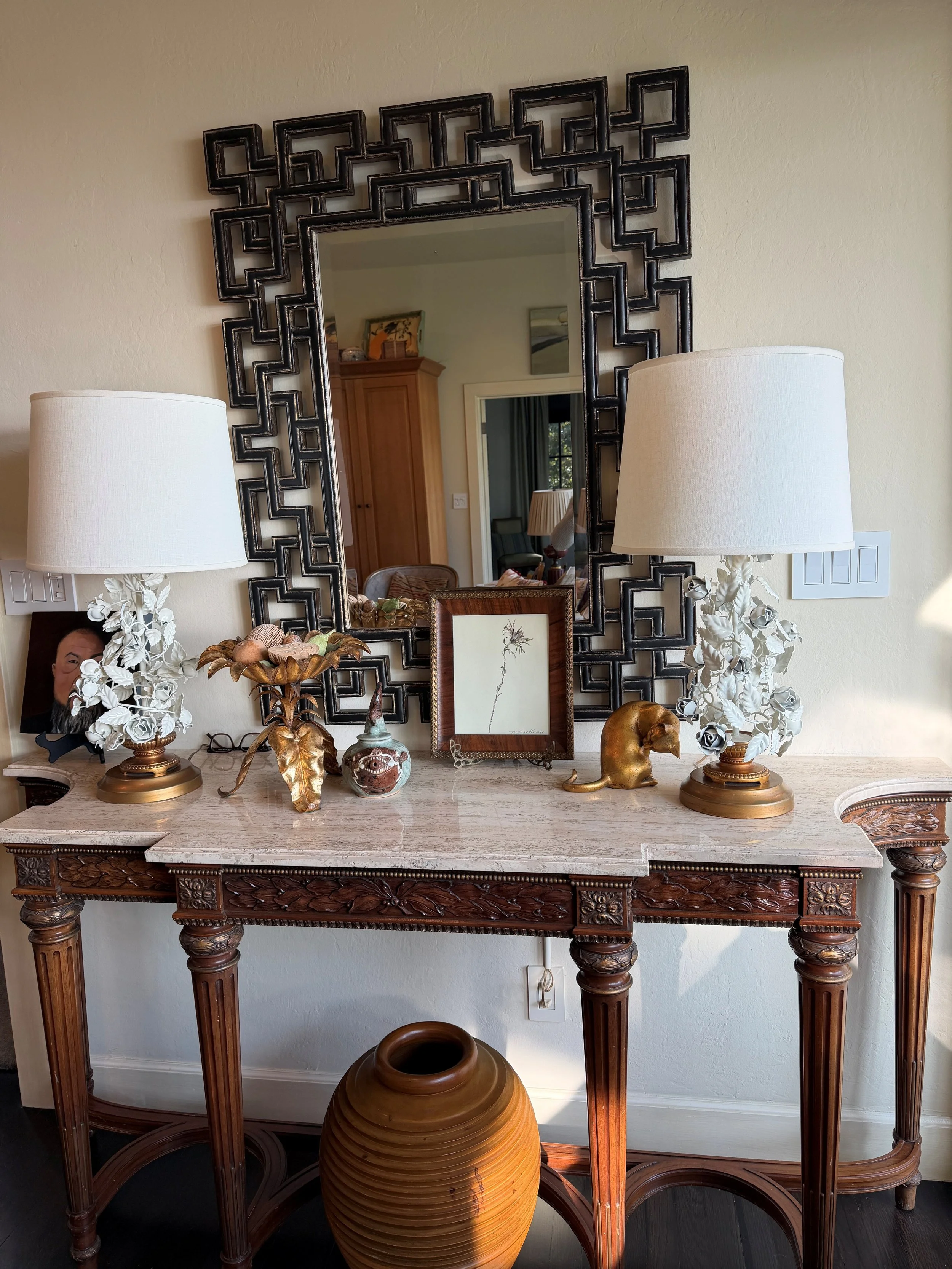
The Elements
Louis XV-style marble-top walnut and parcel-gilt console table with marble top, c. 1920s-1940s
Handmade Hollywood Regency Italian toleware rose-and-leaf stem table lamps (2), mid-century
Bombay Co. distressed black-and-gold Greek key motif beveled mirror, mid-2000s
Hollywood Regency gilt-metal footed dish with foliate detailing and curved legs, mid-century
Chinese-style celadon-glazed ceramic fish teapot, c. 1980s or 1990s
Solid walnut frame with gilt beaded molding on brass filigree easel, both mid-to-late 20th-century
Cat figurine, finished with gold leaf, by Anthony for Freeman-McFarlin Pottery, c. 1950s-1960s
Hand-turned Southeast Asian mango floor vase with rolled rim, 1970s–2000s
An affinity for Hollywood Regency inspired this console table arrangement. Glamorous and theatrical, the design style emerged in 1930s Los Angeles, drawing on the lavish sets of Hollywood's Golden Age and the homes of its movie stars. It remained popular through the 1950s and 1960s.
Lorem Ipsum…